Two roads do most of the work of getting drivers across the Pennines between Greater Manchester and South Yorkshire, and people who use them regularly tend to have firm opinions about which is better. Snake Pass twists over the High Peak on the A57. Woodhead Pass runs a few miles to the north on the A628 — wider, straighter and busier. Both start near Glossop, both finish somewhere useful on the eastern side of the hills, and both can turn nasty in bad weather. Which one you pick depends on what you actually want from the drive.
First, the basics compared
- Snake Pass (A57) — Glossop to Ladybower and on towards Sheffield. Around 20 miles of steep gradients, tight bends and a couple of proper hairpins near the Glossop end. Single carriageway throughout, with long exposed stretches across open moorland.
- Woodhead Pass (A628) — from Hollingworth and Tintwistle over to Langsett and Penistone, linking the Tameside area with Barnsley and the M1. Broader, straighter and generally quicker, running past the chain of Longdendale reservoirs.
- Height — the Snake's summit sits just under 1,700 feet. Woodhead's is a little lower, but don't let that fool you: both are high, exposed and regularly closed by snow, ice or high winds.
- Character — the Snake is a driver's road. Woodhead is a working road.
Scenery: two kinds of bleak, both worth it
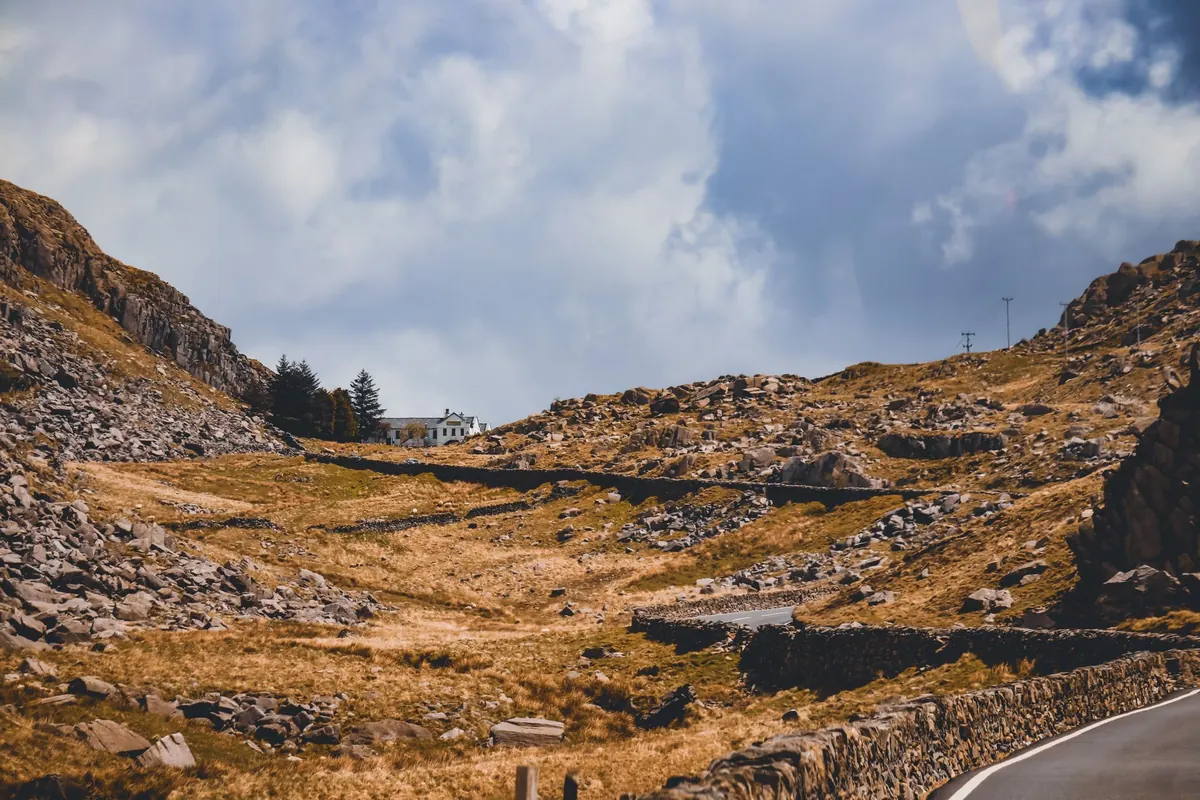
Leaving Glossop on the Snake, the road climbs through Chunal and then lets the landscape open out. You get the Ashop Valley, heather moorland, grouse butts and a horizon that keeps going. The last stretch down towards Ladybower is the highlight for most people: the reservoir appears below you, Ashopton Viaduct carries you across the water, and Win Hill and the Derwent edges frame the view ahead. On a clear evening, that descent is one of the best few miles of road in England.
Woodhead is different. The Longdendale valley is greener and more enclosed at first, with the reservoirs — Torside, Rhodeswood, Valehouse, Bottoms and Woodhead — strung out along the valley floor beside the road. The old railway line that once ran alongside them is now the Trans-Pennine Trail, so you'll often see walkers and cyclists below you. Further up, past Crowden, the land opens into moorland that feels every bit as remote as the Snake, but the road itself keeps its shape.
If you want the view, take the Snake. If you want to watch the valley change as you cross it, Woodhead gives you more to look at without demanding your full attention.
How hard is the drive?
Snake Pass
Demanding, but not difficult in the way an alpine pass is. The hairpins above Glossop need second gear and a bit of patience, and there are crests where you genuinely cannot see what's coming. Add sheep, cyclists, motorcyclists and, in winter, patches of ice that linger in shaded cuttings long after the rest of the road has cleared. If you're towing a caravan or driving a large van, think carefully — there are easier ways across the hills.
Woodhead Pass
Much more forgiving. Wider lanes, longer sight lines and gentler curves mean you can hold a steady speed without constantly working the gearbox. There's still a serious climb, and the weather up top can be completely different from the weather in the valley — fog, crosswinds and snow are all real possibilities. But as a straightforward crossing, it asks far less of the driver.
Traffic, lorries and the weekend crowd
Woodhead is a freight route, and it shows. Weekday daytime traffic is often a slow queue behind HGVs grinding up towards Langsett, and overtaking opportunities are limited. If you need to be in Sheffield or Barnsley on a Tuesday morning, that's the price of the wider road.
The Snake's traffic is more seasonal. Summer weekends bring out motorcyclists, cyclists and day-trippers heading for Ladybower, and the stretch around the reservoir can crawl. Sunday afternoons in July and August are the worst of it. Outside those windows — a weekday morning in spring, say — you can drive the whole thing and barely see another car, which is when it's at its best.
Both roads see closures for roadworks and landslips, and both shut when the weather turns. Check before you travel rather than assuming the route is open.
The best time to drive each
- Snake Pass: early on a weekday morning, or a long summer evening when the light is low and the traffic has gone. Autumn is lovely for colour on the moors. Avoid Sunday afternoons and bank holidays.
- Woodhead Pass: before seven on a weekday, or after the evening peak. Sunday mornings are usually quiet. It's also the sensible choice if you simply need to get across and the weather is marginal.
Worth knowing: the two routes are close enough that you can drive one out and the other back, giving yourself a proper loop of the Dark Peak rather than an out-and-back.
Practical tips before you set off
- Check the forecast and the live road status for closures. Conditions on the tops are often far worse than in Glossop or Sheffield.
- Fill up and eat before you leave. There's nowhere much to stop for fuel once you're up there, and few places to buy food along the way.
- In winter, don't attempt either pass in snow unless you have the right tyres and some experience of driving in it. Both close, sometimes for days.
- Mobile signal is patchy, so download your route in advance if you rely on a phone.
- Give cyclists and horses plenty of room. Passing on a blind bend isn't worth the few seconds it saves.
- If you're heading out alone in cold weather, tell someone where you're going and when you expect to be back.
Pick the Snake for the drive itself, and Woodhead for the crossing. Either way, leave early, take your time, and stop at Ladybower or down in Longdendale to actually look at where you've just been.