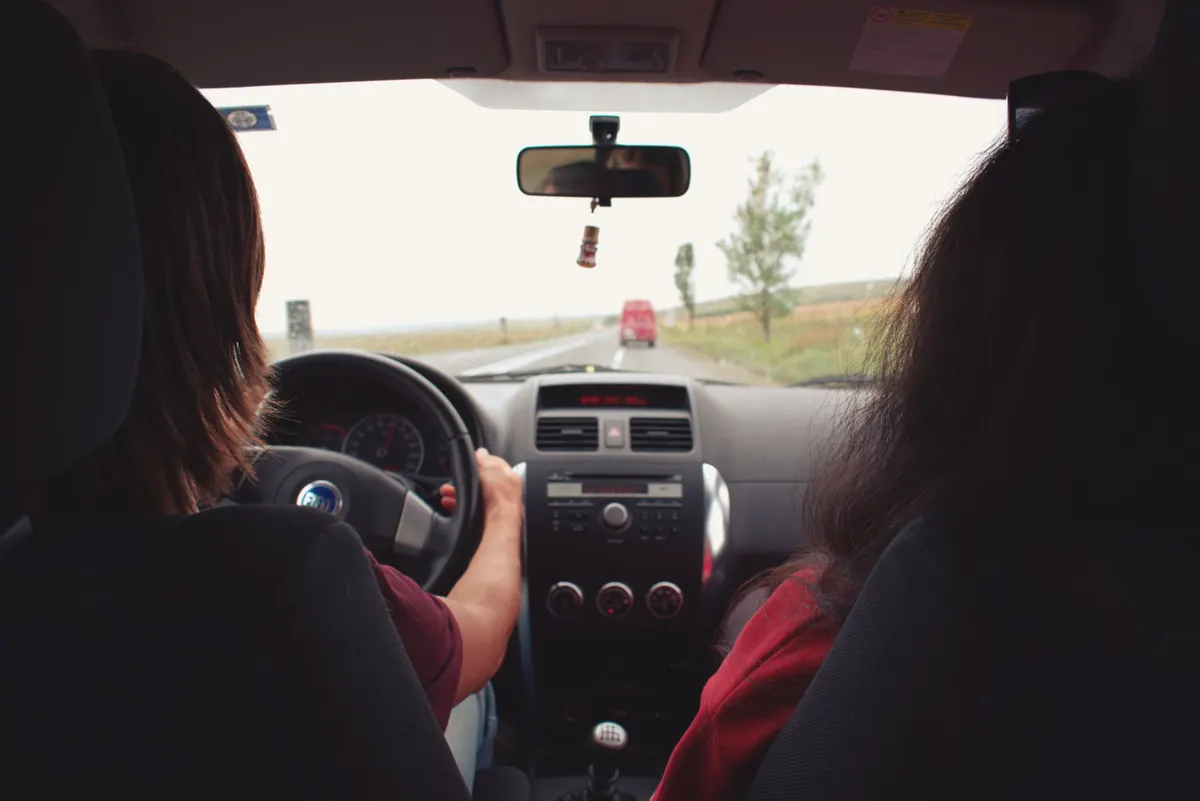
Drive the M62 over the Pennines, the M6 past Lancaster or the M1 south of Leeds and you will have noticed the change. Hard shoulders have become running lanes, gantries now sit every few hundred metres, and cameras watch from above. For most journeys it means extra capacity and a slower, steadier flow. But the rules that come with those lanes are stricter than many drivers assume, and the signs are not decoration. Here is what they mean in plain English, and how to deal with them calmly.
What "smart motorway" actually covers
The term gets used loosely, but there are three broad types you will meet on northern routes.
- Controlled motorway. The hard shoulder stays as a hard shoulder. Variable speed limits appear above the lanes.
- Dynamic hard shoulder. The hard shoulder opens to traffic at busy times and is closed again with a red X when it is not safe to use.
- All lane running. The hard shoulder has gone for good and is now a permanent running lane, with emergency areas provided at intervals instead.
The principle is the same whichever version you are on: the electronic signs above your lane are instructions, not suggestions. If you only take one thing from this piece, take that.
Red X: the sign you must not ignore
A red X above a lane means that lane is closed. It is legally enforceable, and cameras on the gantries are common. Driving past a red X can lead to a fine and penalty points, with an awareness course sometimes offered instead.
The reason for the closure is often invisible. It might be a stranded car just around the bend, debris, an ambulance working further ahead, or workers in the carriageway. Assume there is a genuine reason even when you cannot see one.
- Move out of the lane early, in a sensible gap, rather than at the last second.
- Do not cross a red X to reach a slip road you are about to miss. Carry on to the next junction and come back.
- Once you have passed the sign, stay out of that lane until the X clears.
If the red X appears while you are alongside it
Signal, find a gap and move across when it is safe. Do not brake sharply or swerve. Everyone behind you has seen the same sign, and a panicked lane change in heavy traffic is far more dangerous than a few seconds spent waiting for a space.
Variable speed limits are limits, not advice
A number inside a red circle on a gantry is the legal speed limit, exactly the same as a roadside sign. Amber flashing lights mean the limit is advisory — worth heeding, but not enforceable in the same way. When the gantries are blank, the national speed limit applies unless something else tells you otherwise.
Limits frequently drop with nothing obvious in front of you. The queue may be beyond a bend, the incident may be a mile ahead, or the reason may be on the opposite carriageway. Slowing down is what prevents the stop-start ripple that turns a small problem into a long delay.
Reading the gantries properly
Each lane gets its own sign, so check the one directly above you rather than the one in the middle distance. Signs can change as you approach, so look up again as you get closer rather than setting your speed once and forgetting it.
Emergency areas and breakdowns
Emergency areas, sometimes called refuges, have orange surfacing and a blue SOS box with an emergency phone that connects straight to the control room and tells them where you are. The spacing varies a lot between schemes, and on older stretches they are thinner on the ground. It is worth noting them as you pass so you know roughly how far the next one is.
If something goes wrong:
- If the car is still moving, keep going to the next emergency area.
- If it is not, pull as far left as you can, switch on your hazard lights, and stop with your wheels turned to the left.
- Leave by the left-hand door if it is safe, and stand behind the barrier, well away from traffic.
- If you are stuck in a live lane, stay belted in and call 999. Do not call your breakdown provider first.
Roadworks: cones, narrow lanes and average cameras
Major upgrades run for months, and the temporary layout is what catches people out. Narrow lanes, contraflows and reduced limits are all there to protect people working a few feet from moving traffic.
- Average speed cameras measure your speed across a stretch, so braking hard at each camera achieves nothing. Assume the whole length is monitored.
- Merge in turn at a lane closure. Use both lanes up to the merge point and take it in turns — it is what the Highway Code expects and it keeps queues shorter.
- Leave a bigger gap. Cones get knocked into lanes, and surfaces are often rougher than the finished road.
- Check width limits if you tow a caravan or drive a wider vehicle, especially in contraflows.
- Watch for temporary signs that override the permanent ones.
A quick checklist before you set off
- Check for roadworks on your route before leaving, not when you reach the cones.
- Add time to the journey rather than trying to recover it in a 50mph stretch.
- Top up fuel or charge; slow traffic and diversions eat range.
- Plan where you will stop for a break, and check whether services or exits are closed.
Staying legal and staying calm
Treat every overhead sign as a direct instruction to you, watch your own lane's gantry, and never move into a lane under a red X. If you miss a turn, carry on and sort it out at the next junction. Losing two minutes is always cheaper than a penalty notice — or a collision with something you could not see.
If you are unsure whether a specific restriction applies to you, or you receive a notice through the post, check the official guidance or take proper advice rather than guessing. And if the traffic is heavy, remember that the whole point of the system is to keep everyone moving at a steady pace. Match the flow, leave the gap, and read the signs.
Photo: knerri61 / Pixabay