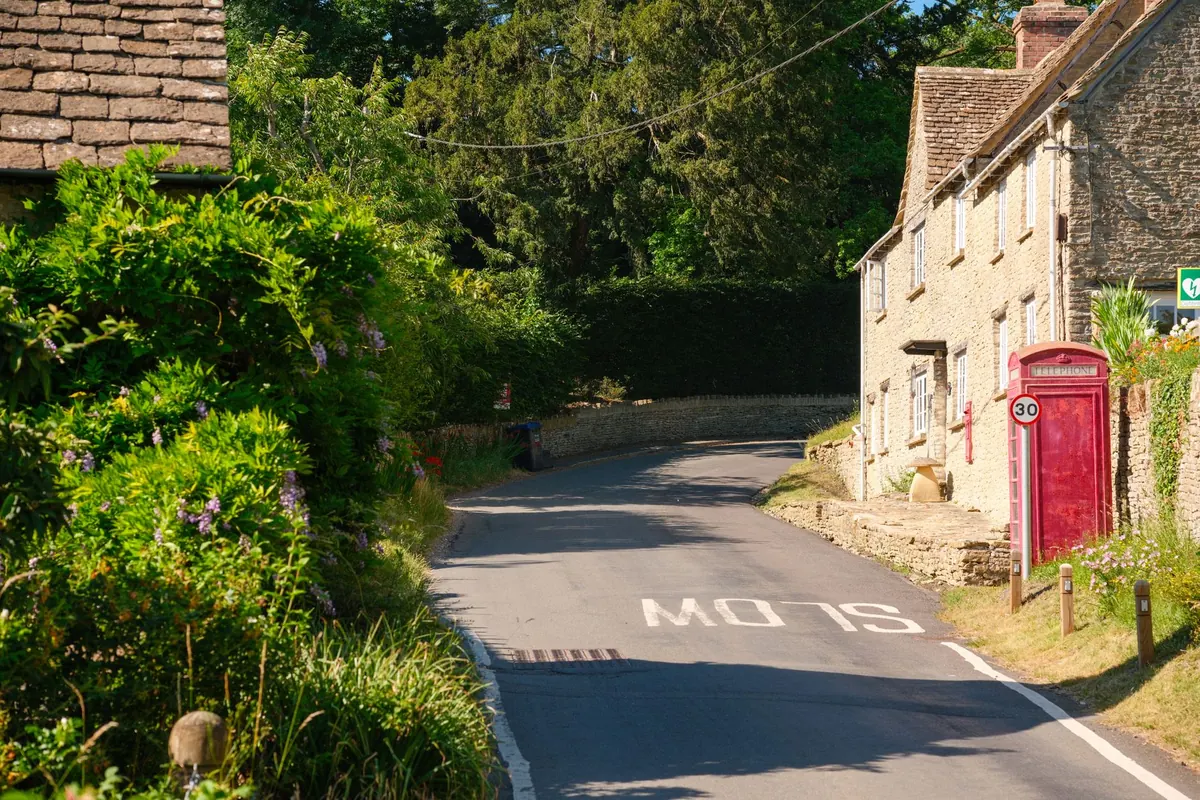
On a map, a single-track lane is a thin green line with passing places dotted along it like beads. Behind the wheel it feels like something else entirely: no centre line, hedges at window height, a blind bend every hundred yards and the strong possibility of a tractor around the next one. Driven badly, a narrow lane is a lurching stop-start ordeal. Driven well, it is the most satisfying driving in the country.
Here is how to get it right.
Read the Lane Before You Commit
Within the first hundred metres of turning off a main road, work out what you are dealing with. How wide is it? Where do the verges firm up and where do they turn to soup? Are there gateways, farm entrances, lay-bys or driveway mouths you could use if something came the other way? Most lanes give you this information early, and most drivers ignore it.
Then set your speed by what you can actually see to be clear. On a lane with a high hedge and a blind bend, that distance can be twenty or thirty metres, not two hundred. Keep left even when nothing is coming — cutting the inside of a bend on an empty-looking lane is how you meet someone head-on.
Horn use is worth a mention. A short, quiet tap on the approach to a genuinely blind bend or over a narrow humpback bridge is reasonable and is what the horn is for: warning others of your presence. Long blasts and angry hooting are not.
Passing Places: The Rules That Keep Things Moving
Passing places are simple, but the etiquette around them trips up visitors and locals alike.
- If the passing place is on your left, pull into it and let the oncoming vehicle come through.
- If it is on your right, stop opposite it — do not cross the lane to use it — and let the other driver pull in.
- Give way to traffic coming uphill. A car that has stopped on a gradient may struggle to get moving again, and a loaded trailer cannot restart easily at all.
- Never park in a passing place, even for two minutes to read a map. It is someone's escape route.
- Do not assume a gap is a passing place. It may be a private drive, a field gate or a cattle grid approach.
- Slow early, signal clearly and keep your position predictable.
If you arrive at a passing place at the same moment as another car and it is on your left, the decision is made for you. If you are both unsure, a raised hand and a brief stop usually sorts it out faster than any amount of reversing.
Blind Bends, Crests and Hidden Junctions
Look through the hedge, not just at the road. You can often spot oncoming traffic by a roof line above a hedge, a wing mirror flicking between gaps, dust, exhaust haze or the shadow of a vehicle on a bend. On a downhill approach to a humpback bridge, the roofline of a car climbing the other side is frequently visible before anything else.
Lift off before the bend, not in it. Brake gently in the wet, where the middle of a lane collects gravel washed off the sides, and in autumn, when damp leaves make shaded corners unusually slippery. Standing water hides potholes, and potholes on a lane can be deep enough to damage a wheel or knock your alignment out.
Farm entrances deserve the same caution as junctions. A tractor pulling out of a field gate with a wide implement rarely appears gradually.
Meeting Farm Traffic
Tractors, trailers, telehandlers, combine harvesters and livestock all use these lanes as a workplace, not a scenic route. A tractor with a twelve-foot implement behind it may be wider than half the lane, and reversing one with a trailer on a single-track hill is a genuinely difficult manoeuvre. Make life easier for everyone: pull into a gateway or passing place, stop and let them come past.
Do not wave a tractor on unless you are certain there is room. Sitting in a spot where they cannot fit just forces the driver to stop and start shunting.
Watch for what farm traffic leaves behind. Mud on the road is slippery, especially where a stream of tractors has dragged it across a bend, and stones flicked up by big tyres will find your paintwork. Slow down, drop back from the trailer, and allow extra braking distance.
If you meet a herd of cattle or sheep being moved along the lane, stop, switch off the engine if the animals are close, and wait. Revving, edging forward and hooting only scatters them. Wait for a wave from the farmer — they know where the gate is. Sheep will bolt in whatever direction they were already thinking about, so give them a moment.
Reversing Without the Sweat
Reversing on a narrow lane is the part most drivers dread. The trick is to make the reverse as short as possible and to take your time over it.
- Stop early. The moment you see an oncoming vehicle and there is clearly no room for both, stop. Every metre you creep forward is a metre you may have to reverse later.
- Check behind before you move. Walk back if you have to. Walkers, cyclists, children, tractors and the soft edge of a verge are easy to miss in a wing mirror.
- Reverse into the nearest safe gap — a passing place or gateway you know is clear — and keep the car straight rather than steering in an arc.
- Use both mirrors and look over your shoulder, with the rear camera as a supplement rather than a substitute.
- Keep it to walking pace, with light brake pressure. Nudging the opposite hedge or a dry stone wall is expensive.
- If you cannot see, stop. Get out and look, or ask the other driver to guide you. Nobody will think less of you.
If the other driver is closer to a gap, or simply seems more confident, accept their offer to reverse. Pride has no place on a single-track lane.
Sharing the Lane With Horses, Cyclists and Walkers
Pass horses slowly and wide, without revving, horn or engine noise close behind for longer than necessary. Wait for the rider to signal before you pass. Cyclists get the same courtesy: hold back on blind bends and overtake only when you can see a clear stretch, leaving a generous gap. Walkers are often in the middle of a lane with no footpath and have nowhere to go — slow right down and wait.
Before You Set Off
A few practical habits make lane driving far easier. Know how wide your car is with the mirrors out, and remember that a wider car may not fit a gap that a hatchback does. Fill up beforehand if you are heading into the hills, and carry enough charge on your phone to get help — coverage in remote valleys is patchy, so tell someone your route and rough arrival time.
Allow more time than the satnav suggests. A route that takes twenty minutes on an A-road can easily take forty on a lane, and the scenic shortcut is not a shortcut if you are reversing every few hundred yards. In winter, expect grease, standing water, ice in shaded cuts and fords that rise after rain. In summer, expect a lot more traffic on the same narrow road.
Above all, drive at a speed that lets you stop within the distance you can see, and treat every blind bend as though something is coming. Do that, and a single-track lane stops being a test and becomes a pleasure.
Photo: Ben Prater / Pexels